Collection: Martian Meteorites - (Parent Body: Mars)
 Like the Moon, Mars experiences frequent asteroid and meteoroid impacts. Some of these collisions are powerful enough to eject Martian rock beyond the planet’s gravity and into interplanetary space. On rare occasions, these fragments are sent into Earth-crossing orbits. If a fragment survives its fiery passage through Earth’s atmosphere and reaches the ground, it becomes known as a meteorite.
When a suspected Martian meteorite is recovered—often by experienced meteorite hunters—a sample is submitted for scientific analysis. Using petrographic thin sections, chemical testing, and isotopic studies, Meteoriticists compare the specimen's composition to known planetary materials. Its Martian origin is then confirmed through a combination of mineralogical, chemical, and isotopic signatures. Once classified, these rare extraterrestrial specimens find their way into museums, universities, research collections, and private collections around the world.
But the most definitive evidence comes from gas trapped inside the rock!
Martian meteorites contain tiny bubbles of gas sealed within glassy inclusions. When analyzed using mass spectrometry, the gas composition matches the Martian atmosphere exactly as measured directly by NASA’s Viking landers in the 1970s and confirmed by later missions like Curiosity. The match is so specific that there's no other natural source on Earth (or elsewhere) with the same gas profile.
The Interstellar Collection offers a wide array of genuine, scientifically-classified Martian meteorites.
Curious on what it would be like to live on Planet Mars? Click here to read what it could be like!

-
The Interstellar Collection Virtual E-Gift Card
Regular price From $10.00 USDRegular priceUnit price per -
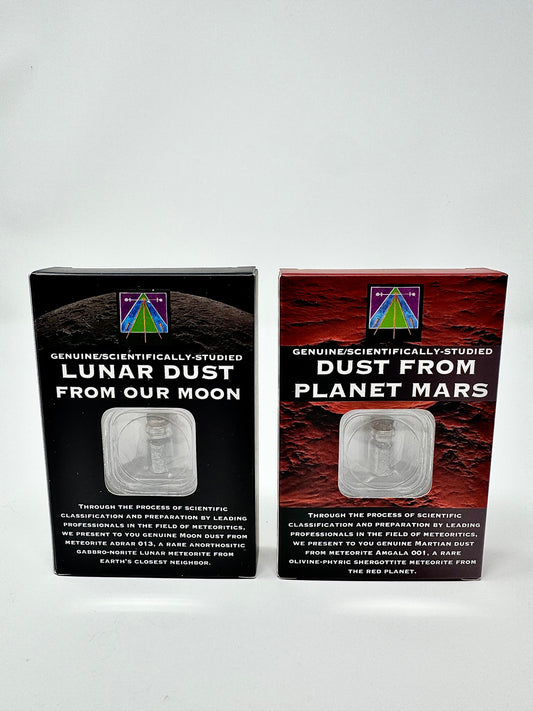
Genuine Lunar + Mars Dust Vial Combo Pack
Regular price $110.00 USDRegular priceUnit price per$120.00 USDSale price $110.00 USDSale -
NEW/FULL SLICE: 18.8g Genuine Martian Meteorite - Scientifically Studied Rock From Planet Mars w/ Aqueous Alteration - NWA 18281
Regular price $3,750.00 USDRegular priceUnit price per -
NEW/2ND TO MAIN MASS: 36.7g Genuine Martian Meteorite - Scientifically Studied Rock From Planet Mars w/ Aqueous Alteration - NWA 18281
Regular price $6,050.00 USDRegular priceUnit price per -
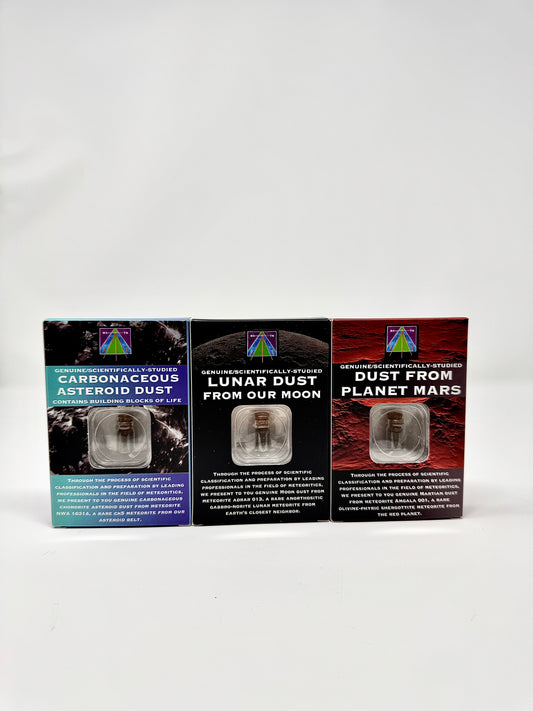
3 Pack Special: Genuine Lunar, Mars and Carbonaceous Dust Vial Combo Pack
Regular price $125.00 USDRegular priceUnit price per$150.00 USDSale price $125.00 USDSale -
NEW/MAIN MASS: 60.4g Genuine Martian Meteorite - Scientifically Studied Rock From Planet Mars w/ Aqueous Alteration - NWA 18281
Regular price $9,750.00 USDRegular priceUnit price per -
NEW: 3.3g Genuine Martian Meteorite - Scientifically Studied Rock From Planet Mars w/ Aqueous Alteration - NWA 18281
Regular price $650.00 USDRegular priceUnit price per -
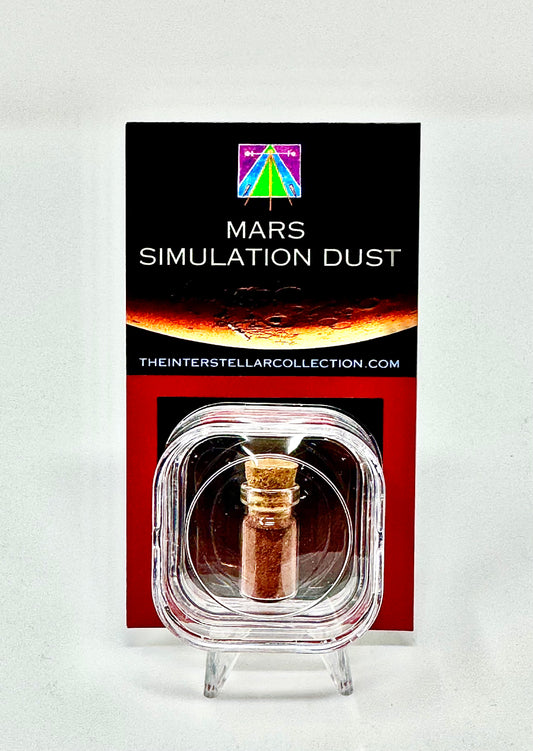
Mars Surface Simulant Dust - Engineered by NASA to Replicate Martian Terrain
Regular price $18.99 USDRegular priceUnit price per -
NEW: 2.1g Genuine Martian Meteorite - Scientifically Studied Rock From Planet Mars - NWA 18281
Regular price $420.00 USDRegular priceUnit price per -
NEW: 1.4g Genuine Martian Meteorite - Scientifically Studied Rock From Planet Mars w/ Aqueous Alteration - NWA 18281
Regular price $280.00 USDRegular priceUnit price per -
NEW: 7.5g Genuine Martian Meteorite - Scientifically Studied Rock From Planet Mars w/ Aqueous Alteration - NWA 18281
Regular price $1,500.00 USDRegular priceUnit price per -
NEW: 2.5g Genuine Martian Meteorite - Scientifically Studied Rock From Planet Mars w/ Aqueous Alteration - NWA 18281
Regular price $500.00 USDRegular priceUnit price per -
18.1g Stunning, Genuine Martian Meteorite with Aqueous Alteration - NWA 18281 - Scientifically Studied Rock From Planet Mars
Regular price $3,710.00 USDRegular priceUnit price per -
13.4g Genuine Martian Meteorite with Aqueous Alteration - NWA 18281 - Scientifically Studied Rock From Planet Mars
Regular price $2,750.00 USDRegular priceUnit price per -
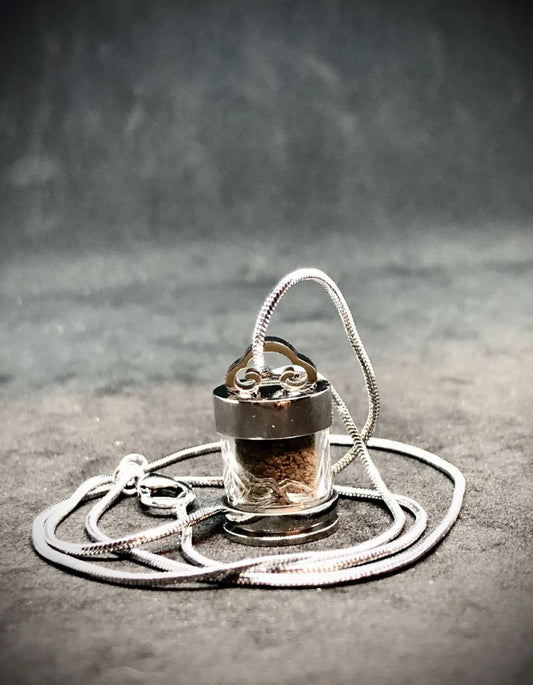
Genuine Martian Meteorite Dust Necklace - Amgala 001 - Scientifically Studied Dust From Mars!
Regular price $64.99 USDRegular priceUnit price per -
16.8g Genuine Martian Meteorite with Aqueous Alteration - NWA 18281 - Scientifically Studied Rock From Planet Mars
Regular price $3,445.00 USDRegular priceUnit price per