The Interstellar Collection
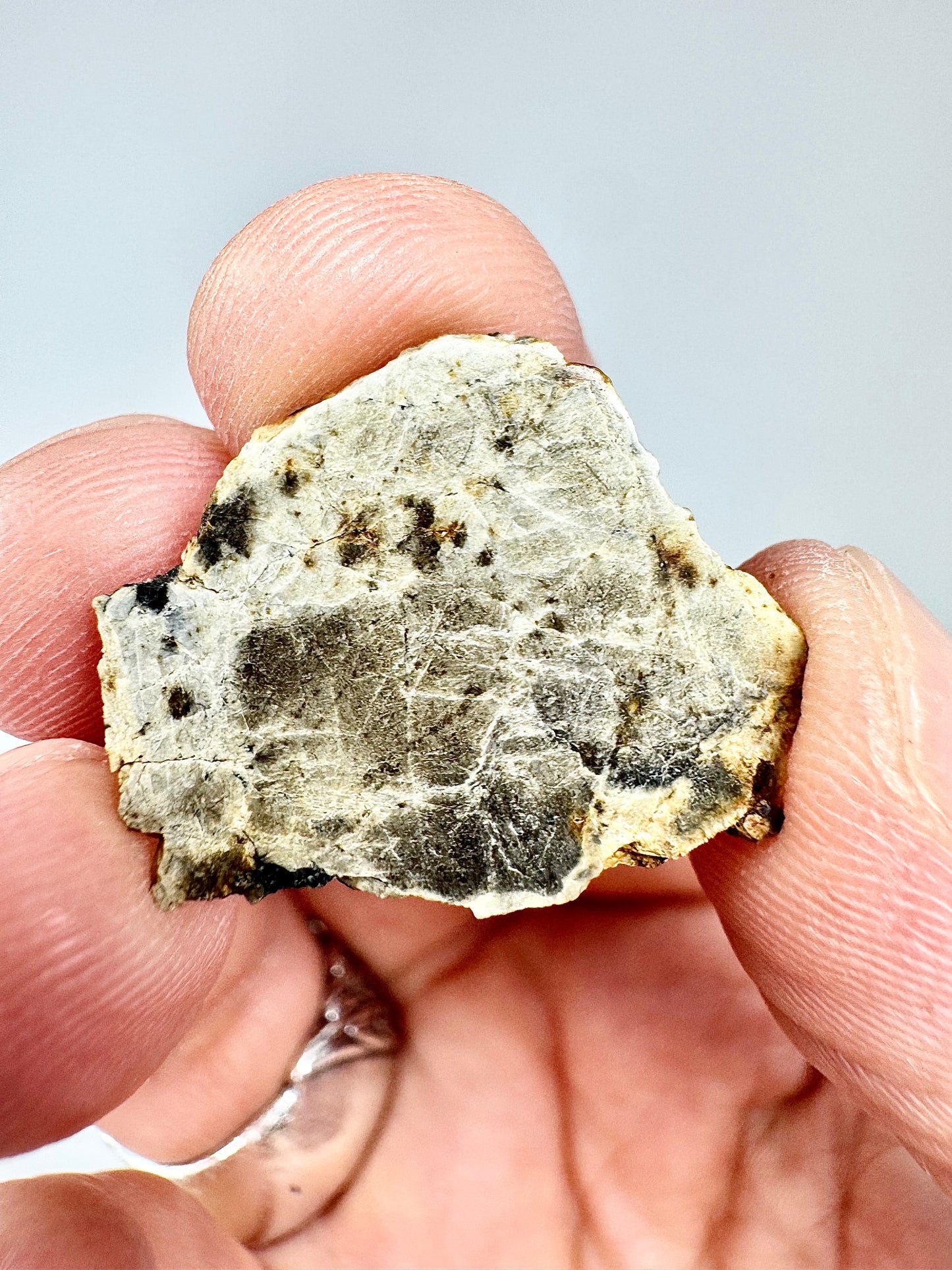
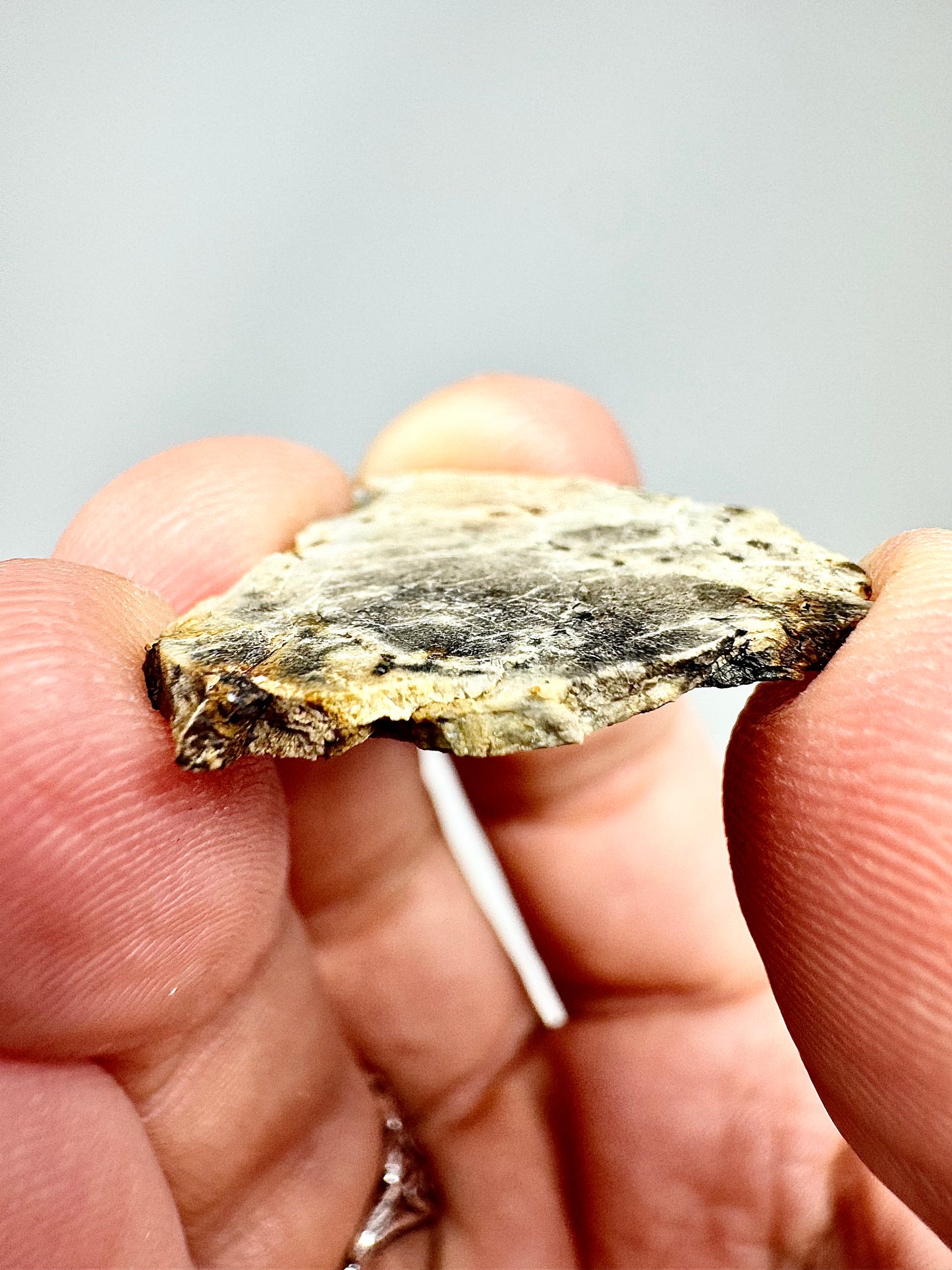
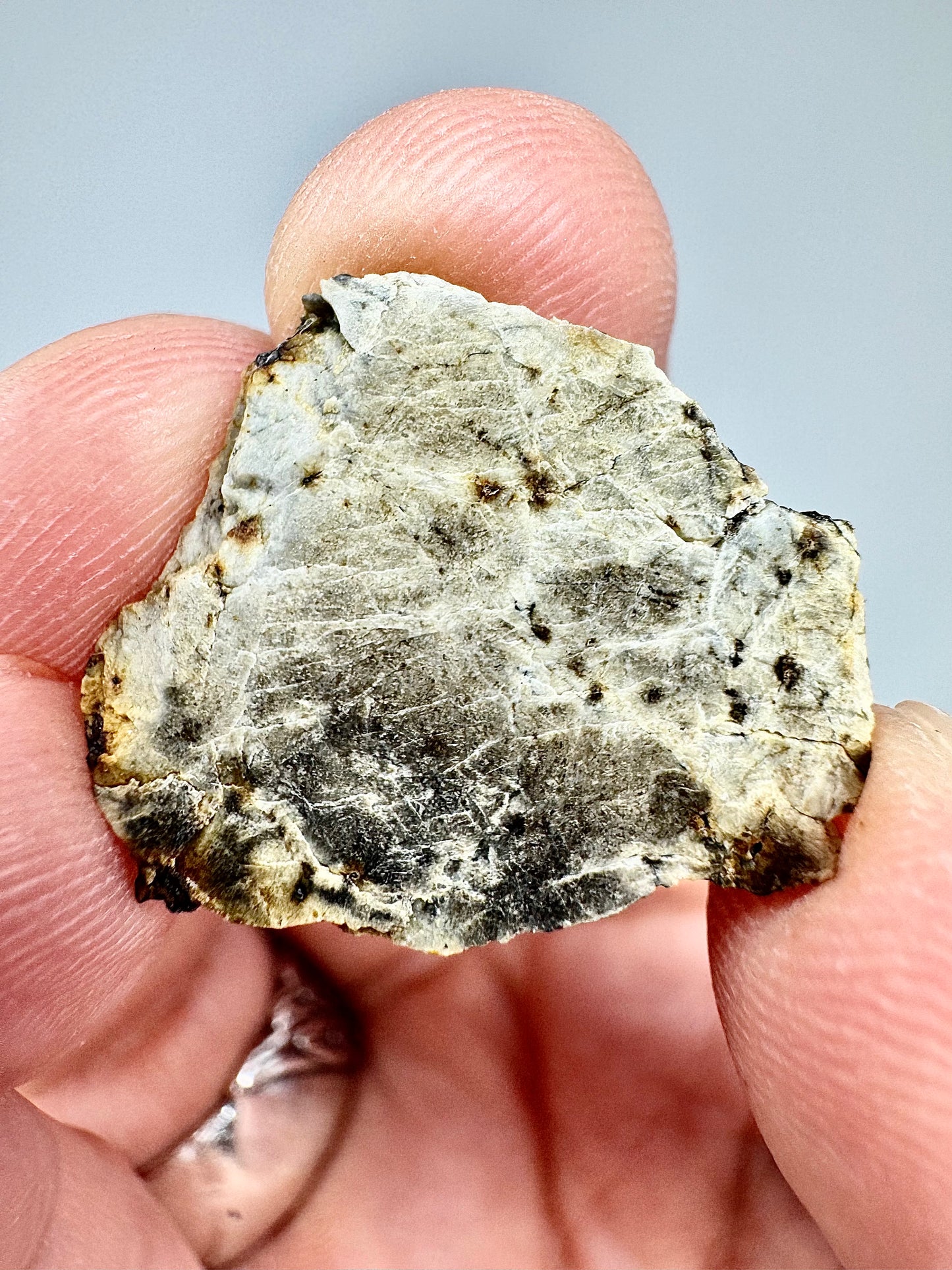
Beautiful Marble-Like Djoua 001 Enstatite Achondrite Meteorite - 2.1g
Beautiful Marble-Like Djoua 001 Enstatite Achondrite Meteorite - 2.1g
Couldn't load pickup availability
Djoua 001 is the name assigned to this beautiful, marble-looking meteorite discovered during February and March of 2021 near the town of Illizi in southeastern Algeria.
Classified as an aubrite meteorite, a subset of achondrites, this class makes up less than 0.2% of all known meteorites. It is primarily made up of the mineral enstatite. Its appearance is fairly light in color, with patches of black that are likely remnants of a weathered fusion crust. Inside, the stone shows a marbled mix of beige and gray hues, broken up by occasional dark or rusty spots and, less frequently, tiny metallic inclusions.
Finding a new aubrite is a significant event in planetary science. There has been speculation of aubrites possibly originating from Planet Mercury, but this is of course just speculation, as we do not have physical specimens or enough data from Mercury to make a solid statement on the subject. We choose to share this possibility so you can hold the specimen and simply say “what if?!”
Understanding Aubrites
Aubrites are an uncommon type of achondritic meteorite that formed under highly unusual conditions during the early development of the solar system. Most aubrites are breccias—rocks composed of broken fragments—dominated by pale enstatite, sometimes featuring bits of olivine, nickel-iron, troilite, and melt-formed clasts typical of other achondrites.
Enstatite, a variety of orthopyroxene, forms under igneous conditions and is considered one of the earliest minerals to crystallize in the solar system. Meteorites rich in enstatite are believed to come from E-type asteroids, such as the near-Earth asteroid 3130 Eger. Interestingly, enstatite has also been detected in environments beyond our solar system, including around aging stars and within planetary nebulae.
About Achondrites
Achondrites are stony meteorites that, unlike chondrites, do not contain chondrules—spherical grains formed from molten droplets in space. While achondrites do contain grains, their textures reflect volcanic or igneous processes rather than the primitive, chondrule-forming conditions of the early solar system.
They account for about 8% of all identified meteorites. Most achondrites are regolith breccias, formed from surface material blasted off planetary bodies such as large asteroids, the Moon, or Mars.
Our Guarantee
Our Guarantee
The Interstellar Collection, LLC is acknowledged by the IMCA (#3950), the Global Meteorite Association (GMA #042) and the Meteorite Club. We work directly with scientists in the field of Meteoritics to bring genuine meteorite specimens into the hands of museums, universities and to the general public. We unconditionally guarantee the authenticity of each meteorite we sell.
Shipping, Returns & Insurance
Shipping, Returns & Insurance
Please read and confirm all of the details in the link below for the most up to date information on our Return Policy:
Care Instructions
Care Instructions
How do I care for my meteorites?
Please visit our FAQ page on our website for the most up to date information on Meteorite care.
Share