The Interstellar Collection
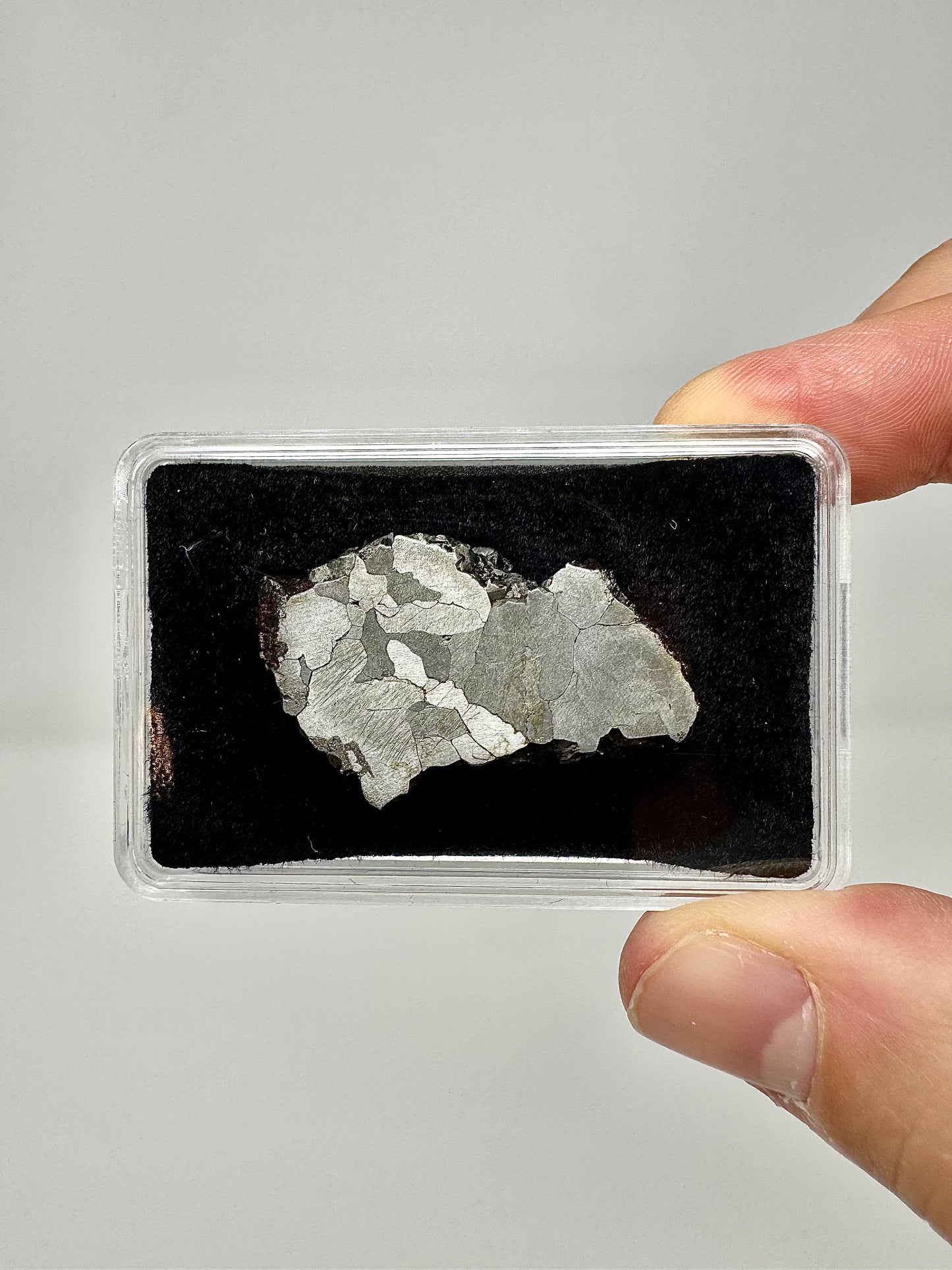
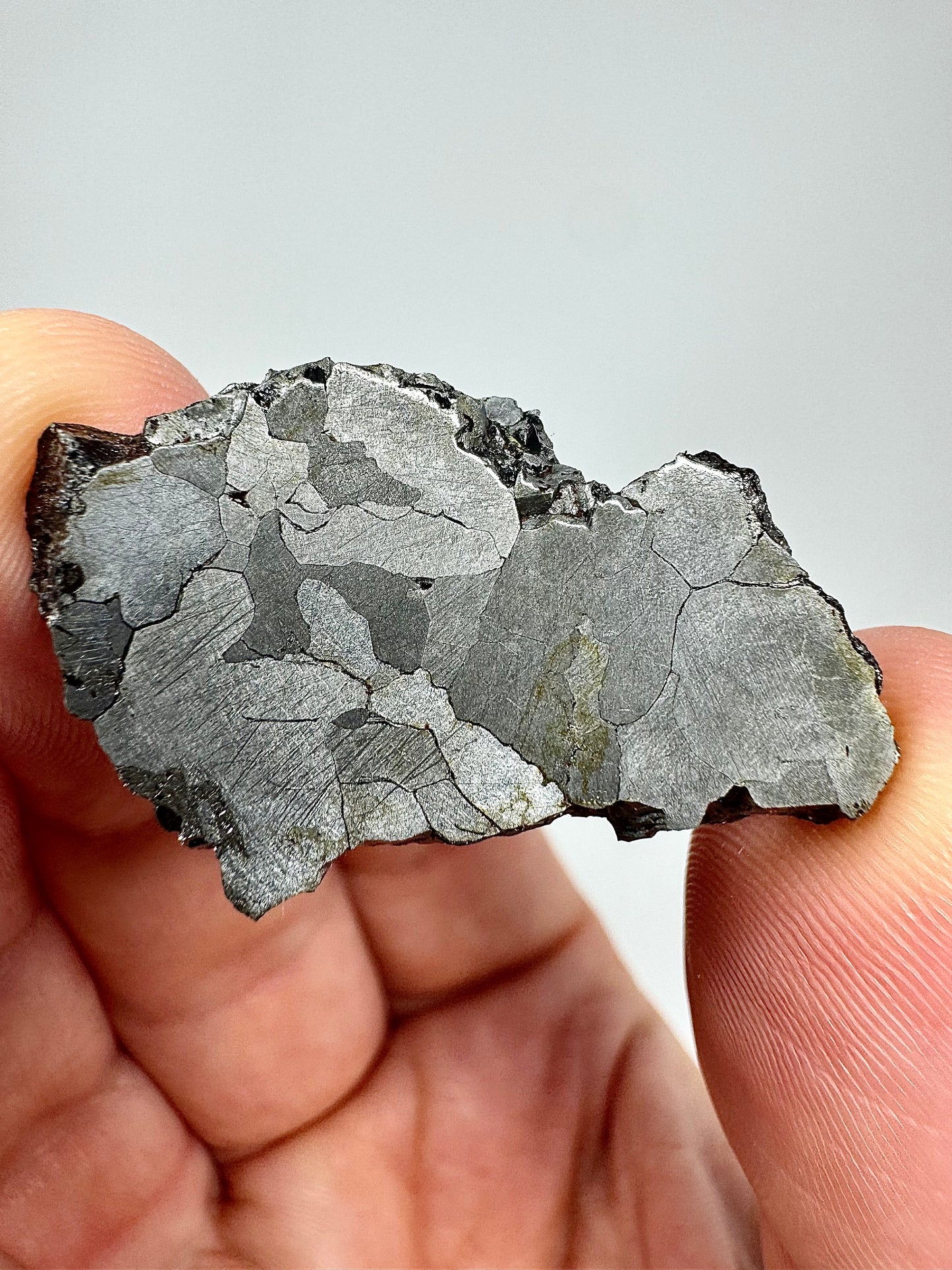
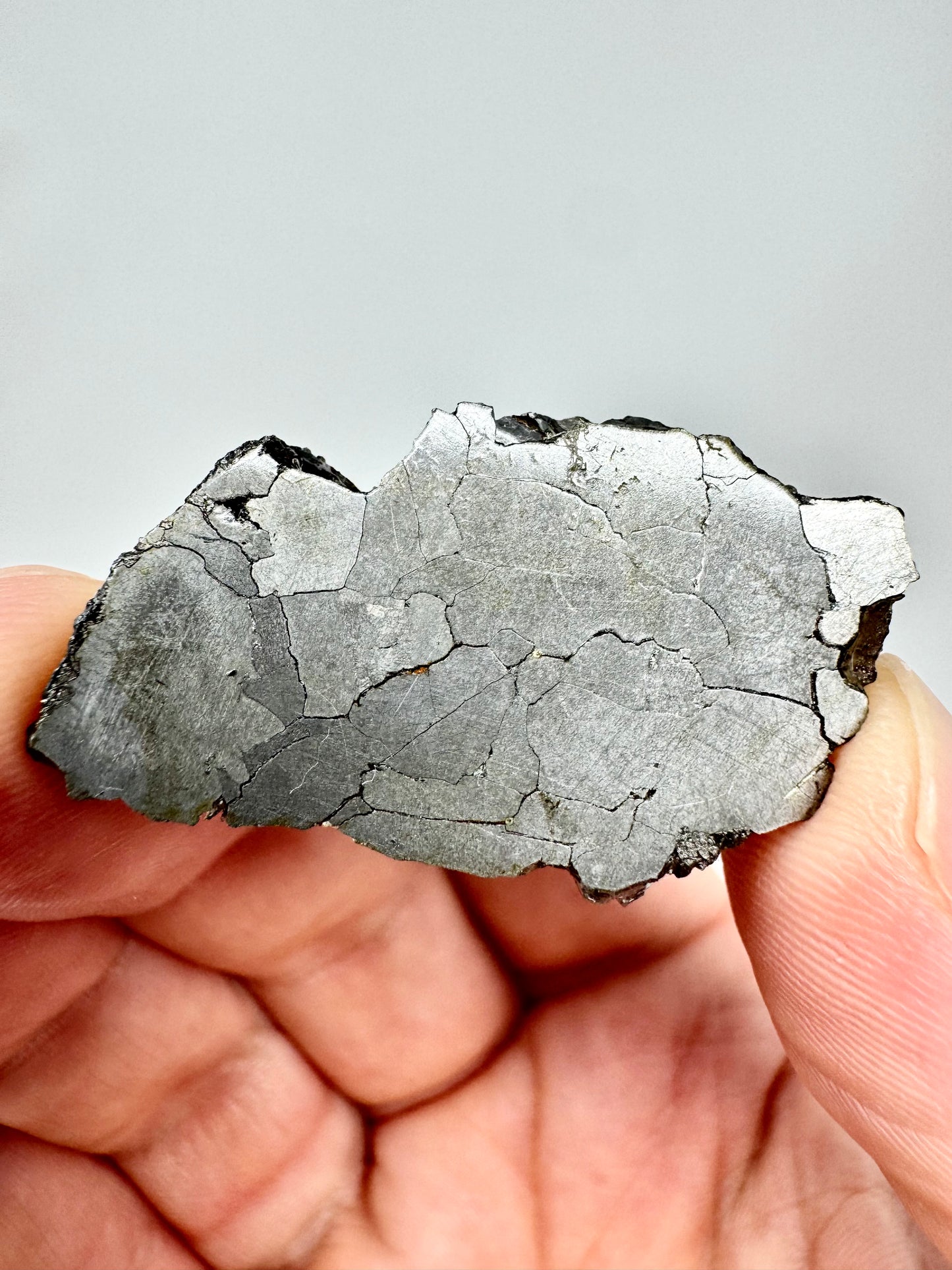
Nantan Meteorite - A Space Rock Originally Recovered for China’s Industrial Era! 16.0g
Nantan Meteorite - A Space Rock Originally Recovered for China’s Industrial Era! 16.0g
Couldn't load pickup availability
During its entry into Earth’s atmosphere, the Nantan meteorite broke apart, scattering fragments over a large area near the city of Nantan in Nandan County, Guangxi, China. This strewn field measured about 17.4 miles long and 5 miles wide. The meteorite was later named after the nearby city in which it fell
The fragments remained untouched until the 1950s, when they were collected with the intention of being smelted to support China’s growing industrial needs. However, the iron was found to contain too much nickel, making it unsuitable for traditional smelting processes.
Originally classified as an IIICD meteorite in 2000, it was reclassified in 2006 as part of the IAB-MG group. A total of around 9,500 kilograms of material has been recovered, including a single fragment weighing approximately 2,000 kilograms. Most of the pieces show significant weathering, a result of their long exposure before recovery. The meteoric iron from the Nantan meteorite contains about 6.96% nickel.
*Note: Nantan meteorite is a known “ruster”. Although professionally stabilized, keep up with maintenance as outlined on this website.
About Iron Meteorites:
Iron meteorites consist almost entirely of nickel and iron and are thought to originate from the cores of ancient, differentiated asteroids. In the early solar system, these large asteroids underwent internal melting, causing heavier elements like iron and nickel to sink toward their centers—much like the Earth’s own core. Over time, catastrophic collisions shattered these bodies, sending fragments hurtling through space until some eventually landed on Earth as meteorites.
One of the most striking features of iron meteorites is the Widmanstätten pattern—a distinctive interlocking crystalline structure of nickel-iron alloys that can be revealed through careful acid etching. This process requires expert preparation, including stabilization, slicing, and polishing, as even slight errors can damage the specimen. The pattern itself is often called the meteorite’s “thumbprint” because it is entirely unique and cannot be replicated in laboratory conditions. Its formation requires incredibly slow cooling—about one degree Celsius every 10,000 years—making it a visual testament to the vast timescales and processes that shaped our solar system.
Our Guarantee
Our Guarantee
The Interstellar Collection, LLC is acknowledged by the IMCA (#3950), the Global Meteorite Association (GMA #042) and the Meteorite Club. We work directly with scientists in the field of Meteoritics to bring genuine meteorite specimens into the hands of museums, universities and to the general public. We unconditionally guarantee the authenticity of each meteorite we sell.
Shipping, Returns & Insurance
Shipping, Returns & Insurance
Please read and confirm all of the details in the link below for the most up to date information on our Return Policy:
Care Instructions
Care Instructions
How do I care for my meteorites?
Please visit our FAQ page on our website for the most up to date information on Meteorite care.
Share